

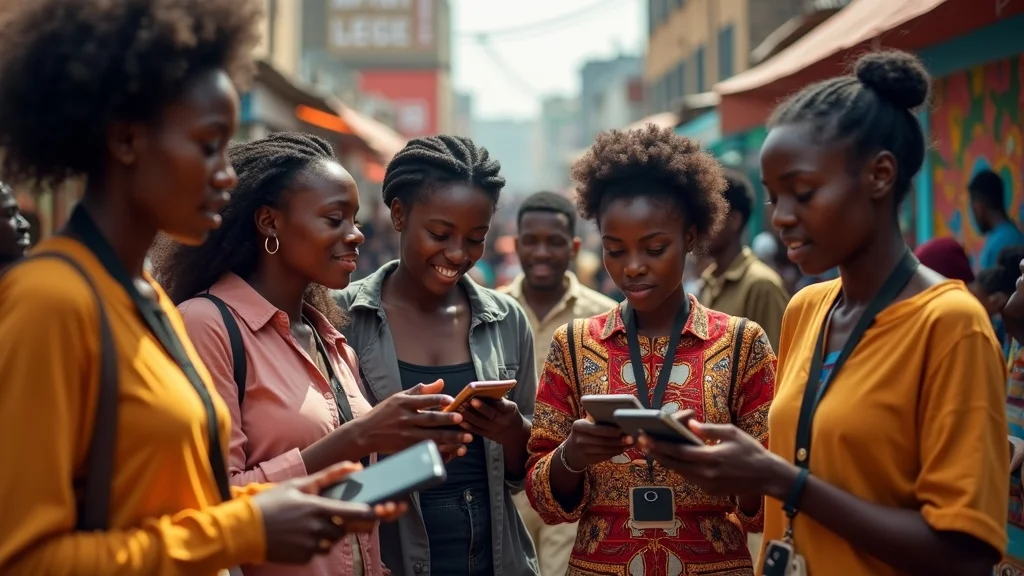
Imagine an open-air market bustling with energetic voices, vibrant textiles billowing under a golden African sun, and people of all ages connecting through both ancient languages and cutting-edge digital tools. This is not just a snapshot of Africa’s present; it’s a vision of our digital future—where African languages, African meaning, and the future of AI are woven tightly together. As technology leaps forward, the richness of Africa’s linguistic diversity stands at the heart of how artificial intelligence will truly serve our communities.
Introduction: African Languages, African Meaning, and the Future of AI in a Changing Digital World
Across the continent, the significance of bridging our heritage with technology has never been clearer. For many African societies, language is more than a tool—it is a vessel for stories, wisdom, and identity. As artificial intelligence becomes more present in daily life, there is a pressing need to ensure that the essence of African meaning is not lost in translation. The development of local AI research and language data remains a vital quest, empowering us to shape ai systems that reflect not just our voices, but our worldviews. The journey to incorporate diverse African languages into natural language processing will define the future of how we use AI tools to advance access to information, preserve culture, and drive local innovation.
What You'll Learn From African Languages, African Meaning, and the Future of AI
- Understand the current role of African languages in artificial intelligence
- Discover the significance of authentic African meaning in ai research and ai tools
- Explore natural language processing challenges unique to African languages
- Find opportunities for African entrepreneurs in the evolving AI landscape
The Vital Importance of African Languages in Artificial Intelligence
African Language Diversity: Foundation for AI Research
With over 2,000 distinct African languages spoken across the continent, linguistic diversity is not just a hallmark of our identity; it is an immense resource for AI research. Each language encapsulates unique meaning structures, oral traditions, and indigenous knowledge systems. When incorporated into ai models, this diversity can help build more inclusive and adaptable ai systems that go beyond basic communication, encompassing local context and culture. Across several initiatives, African universities and language technology hubs are mapping out large numbers of languages, developing language data resources, and piloting new ai tools—all aimed at strengthening the representation of African languages in the digital world. These efforts make it possible to create technologies that preserve endangered languages while also empowering speakers to use AI with confidence and agency.
The foundation of successful natural language processing in Africa rests on compiling comprehensive language data that captures intricacies like tone, meaning, and context. By foregrounding our indigenous languages in AI tool development, our continent creates AI systems that are attuned to African realities. This not only makes technology more accessible but also fosters innovation that resonates with the day-to-day needs and future aspirations of African people.

South Africa and Beyond: Regional Leadership in Language Data Innovation
South Africa has emerged as a regional leader by spearheading projects that gather, curate, and digitise local language corpora for AI. From isiZulu and isiXhosa to Sesotho and Setswana, South Africa’s linguistic research is shaping new frontiers in natural language processing. Public universities, research labs, and private tech companies are collaborating to increase the data availability of African languages for use in ai tools and applications. What sets South Africa apart is its commitment to sharing knowledge and tools, enabling ai research communities in Nigeria, Kenya, Ethiopia, and beyond to adapt and innovate for their own local context.
This regional leadership inspires cross-border partnerships and open-source projects, encouraging grassroots innovation from Lagos to Nairobi and Accra to Addis Ababa. By working beyond national boundaries, African nations can jointly overcome language data scarcity and create AI systems rooted in shared values and lived experience. South Africa’s role highlights the potential for all African regions to become active contributors and not passive consumers of AI technology.
AI, Language Processing, and African Meaning: Reimagining Natural Language
Natural Language Processing for African Languages: Gaps and Breakthroughs
Despite the progress, natural language processing (NLP) for African languages faces significant hurdles. Most mainstream ai systems have been built around global languages such as English, French, and Spanish, often overlooking African contexts. Yet, African researchers and language technologists are rapidly closing these gaps by developing machine translation models, speech-to-text engines, and sentiment analysis tools specifically tuned to indigenous languages. These AI tools are beginning to understand not just literal translations but subtleties born out of oral traditions and local experiences.
The path toward innovation requires a grassroots approach—one where communities, educators, and tech entrepreneurs rally together to collect language data and teach ai models the finer points of African communication. We are seeing more locally-built solutions that help with information access, health awareness, and business, proving that AI success in Africa will depend on how well we reflect African meaning at every layer of digital language processing.
Translation Tools and the Limits of Western-Led AI
Translation tools have long promised to bridge language barriers. However, when it comes to African languages, most mainstream translation tools fail to capture the full meaning and nuance. Too often, these tools are based on Western-led ai systems that do not account for the richness of local idioms, proverbs, and context-specific references. Word-for-word translation misses the heart of communication, leaving users frustrated and misunderstood.
Innovative African AI initiatives are now focusing on building machine translation systems rooted in our unique language structures. By working closely with native speakers and leveraging local data, these projects are redefining what it means to "bridge the gap" in communication, ensuring that AI tools serve people authentically instead of flattening their voices into foreign language molds.
Language Data Sovereignty: Who Defines Meaning in African AI?
At the centre of the debate over african languages, african meaning, and the future of AI is the question of sovereignty: who owns and controls the vast troves of language data used to train ai tools? For too long, African languages and stories have been filtered through external perspectives. Now, a movement for data sovereignty is growing, demanding that African communities define the rules and realities for how their words, idioms, and meanings are coded into ai systems.
By prioritising local involvement in AI research, our continent can make sure AI models echo our worldview rather than dilute or distort it. The journey to true representation requires ongoing investment in education, data collection, and community-led standards—underscoring that the future of AI will be built by Africans, for Africans.
Lists: Key African Languages Shaping the Future of AI
- Swahili
- Yoruba
- Zulu
- Amharic
- Hausa
- Igbo
- Shona

Quote: Reflections on African Languages, African Meaning, and the Future of AI
"African languages carry worldviews and meaning structures that AI must reflect if it is to serve the continent authentically."
Tables: Comparison of Natural Language Processing Resources for Major African Languages
| Language | Data Availability | NLP Toolkit Support | Active AI Research Projects |
|---|---|---|---|
| Swahili | Medium | Yes | Multiple |
| Yoruba | Low | Limited | Emerging |
| Zulu | Medium | Yes | Limited |
| Amharic | Low | Limited | Developing |
| Hausa | Low | Limited | Moderate |
African Language Data: Challenges and Opportunities for AI Tools
The Scarcity of High-Quality African Language Data in AI Research
One of the greatest obstacles to advancing african languages, african meaning, and the future of ai is the lack of high-quality, structured language data for many indigenous languages. This scarcity hinders the development of effective ai tool solutions and can perpetuate digital inequality. Unlike European languages, where vast digital resources are available, many African languages remain underrepresented, making it difficult for ai systems to process or understand them effectively.
Digital inclusion in Africa relies on new strategies for building language databases — from voice recordings and community storytelling to text corpora created in partnership with local linguists. By capturing the true sounds, rhythms, and expressions of African languages, we can ensure that artificial intelligence is a tool of empowerment rather than exclusion. The path forward demands greater local participation and innovative thinking to build robust, culturally rich datasets for AI.

Community-Driven Solutions and Data Collection Initiatives
Across Africa, community-driven initiatives are reshaping how language data is gathered and used. Local volunteers, linguists, and students are coming together to record indigenous stories, digitise texts, and annotate meanings. These grassroots projects do more than feed data into AI research; they reaffirm that language and meaning belong to the people. By building their own datasets, African communities are actively participating in shaping future ai tools to reflect their lived realities.
Mobile apps for crowdsourced translation, open-source language archives, and community-based hackathons are giving everyday Africans the chance to teach ai systems their unique voice. These initiatives set the standard for collaborative AI development—a process rooted in respect for local knowledge, driven by users, not outsiders.
Case Study: AI Tool Development Rooted in African Languages
Consider a case where a group of entrepreneurs in East Africa developed a voice-to-text ai tool for Swahili speakers. By employing community data collection, involving elders and youth in transcription, and working closely with local universities, this project produced an ai system that could accurately process regional dialects and cultural references. The result? More reliable access to digital information, opportunities for local business, and a renewed sense of pride in indigenous language use.
Such successes illustrate how the future of AI in Africa will be built on partnerships—between experts and everyday people, between tradition and technology, and most importantly, between languages and meaning. The work is ongoing, but African ingenuity and determination are carving a clear path for others to follow.

People Also Ask About African Languages, African Meaning, and the Future of AI
How are African languages being integrated into artificial intelligence?
African languages are increasingly represented in natural language processing projects and in locally-built ai tools designed to address African realities. Researchers, startups, and linguistic communities are developing new methods to feed diverse language data into AI systems, ensuring that more voices are being heard in the next generation of AI technologies. This movement is supported by university-led ai research, as well as innovative social projects focused on indigenous language inclusion.
What role does translation play in African artificial intelligence development?
Translation tools serve as vital bridges for accessing information across languages, but their effectiveness in Africa depends on more than direct word-for-word conversion. To truly advance, translation tools must be rooted in deep understanding of African meaning, contextual nuance, and local wisdom. Future AI in Africa will require solutions that prioritise the whole context—preserving untranslatable ideas and ways of seeing the world.
Why is it important for AI tools to understand African meaning and cultural nuance?
Authenticity in AI is only achieved when systems reflect our realities. AI tools that incorporate African meaning become engines for empowerment, enabling users to interact digitally in ways that feel natural and true. This approach also safeguards technological sovereignty, ensuring we shape the future for our own societies, rather than relying on external models that may fail to capture local context and cultural values.
Videos: African Languages, African Meaning, and the Future of AI
Expert panel of African AI researchers discussing language data challenges and opportunities, interspersed with visuals of community data collection, NLP tool development, and interviews with local language users in vibrant African city settings.
A look into South Africa’s leadership and innovation in language data collection, AI toolkits, and application design centred around diverse African languages.
Frequently Asked Questions on African Languages, African Meaning, and the Future of AI
- Which African country leads in ai research for natural language processing?
- What are the biggest barriers for African languages in AI tool development?
- How can African tech entrepreneurs contribute to AI?
Key Takeaways: African Languages, African Meaning, and the AI Opportunity
- African languages are essential for developing authentic and effective AI tools for the continent.
- Data scarcity and cultural nuance are major hurdles—African meaning must be central in language processing development.
- Collaborative, locally-rooted ai research and language data projects are leading the way towards inclusive AI futures.

Concluding Thoughts on African Languages, African Meaning, and the Future of AI
African voices, meanings, and languages hold the key to an inclusive and innovative digital future. Now is the time to centre our meaning in every step of AI’s evolution.
Take the Next Step: Discover the AI Signal Briefs Digital Newsletter Created For African Entrepreneurs and Brand Executives
Ready to stay informed and empowered at the intersection of technology, language, and African innovation? Discover the AI Signal Briefs Digital Newsletter crafted especially for African entrepreneurs and brand executives.




Write A Comment