

Imagine a team of vision-driven African founders standing in a glass-walled office, overlooking the rising skyline of Lagos or Nairobi. Animated data streams from AI voice platforms pulse across their dashboards as the group debates – not whether to adopt artificial intelligence, but how. For leaders across Africa’s fast-growing digital economy, the question has shifted from “why AI?” to “how do we unlock its full, future-facing potential for our business and industry?” This article explores how African businesses and founders should approach and leverage AI adoption at the organisational level for future AI readiness, offering practical strategies, real-world success stories, and crystal-clear next steps tailored to the continent’s unique challenges and explosive opportunities.
Unlocking the Potential: How Should African Businesses and Founders Approach and Leverage AI Adoption in 2026 and Beyond
As Africa’s business landscape rapidly digitises, the urgency for organisation-wide AI adoption grows. The question “how should African businesses and founders approach and leverage AI adoption at the organisational level for future AI readiness” is at the heart of boardroom debates in fintech startups, logistics giants, and customer support service providers across Africa. Digital transformation isn’t a buzzword; it’s the backbone of staying competitive in a global marketplace shaped by voice AI, AI voice agents, and advanced data analytics.
AI readiness at the organisational level means more than integrating cutting-edge technology; it requires a cultural mindset that welcomes change, a commitment to upskilling teams, and the implementation of robust governance frameworks. Today, African businesses using AI are not just automating tasks — they’re leapfrogging legacy systems, creating value in customer experience, and driving measurable returns in productivity. Approaching AI with a future-first mindset ensures that, as 2026 and beyond unfolds, African enterprises are not merely adopting AI solutions, but setting benchmarks for innovative, responsible, and scalable implementation across the continent.

What You’ll Learn About AI Solutions for African Businesses
- Core strategies for AI readiness at the organisational level
- Examples of African businesses leading with AI adoption
- Key steps to leverage AI tools and governance
- Unique challenges and opportunities for African enterprises
The African Business Imperative: Why Future AI Readiness Matters
To remain relevant in the emerging digital marketplace, African businesses must prioritise future AI readiness. As the digital economy accelerates, the adoption of AI solutions has become integral to strengthening brand building systems and maintaining a competitive advantage. The unique socio-economic landscape across Africa means that every organisation needs strategies tailored to local needs, regulatory landscapes, and resource constraints. Visionary entrepreneurs recognise that preparing for AI is essential to unlock scalable growth and resilience.
At the heart of this imperative lies the need for governance, ethics, and practical deployment of AI voice, voice agents, and data-driven content engines. The most forward-thinking African businesses are not just implementing tools—they’re building systems that adapt to disruption and use AI as a catalyst for inclusive and sustainable progress. Investing in future AI readiness allows founders and organisations to weather industry shifts, attract talent, and deliver real value to African customers now and in 2026.

Defining AI Readiness and Its Relevance for African Business Owners
AI readiness refers to an organisation’s ability to adopt, implement, and scale artificial intelligence systems effectively. For African business owners, AI readiness means establishing the right digital infrastructure, nurturing tech-savvy talent, and implementing change management frameworks. Beyond technology, it’s about cultivating a proactive culture that approaches voice AI and AI voice agents as transformative business partners, not just automation tools.
Ready African enterprises have addressed data privacy, invested in content creation systems powered by AI solutions, and encouraged staff to embrace new ways of solving problems. This forward-looking stance enables businesses to identify key areas where AI can enhance brand building, from customer support to data analytics. AI readiness ultimately transforms business operations, enabling organisations to compete not just locally but on the global stage, driving Africa’s rise as a digital innovation powerhouse in the years to come.
Increasing Competitiveness Using AI Solutions
Organisational-level adoption of AI provides a strategic business advantage for African businesses eager to rise above the noise of a competitive landscape. Voice AI technologies streamline customer interactions, while predictive analytics empower decision-makers with actionable insights that improve operational efficiency. These tools fuel content engine flywheels, automating repetitive processes so teams can focus on innovation and high-value brand building activities.
Whether deploying AI voice agents to handle customer queries or leveraging advanced AI for forecasting and demand planning, the end goal is to create measurable value—improved customer loyalty, lower churn, and higher productivity. Forward-thinking African business owners see early AI adoption as the pathway to market leadership, laying foundations for scalable, resilient systems that attract investment and drive sustainable growth as new opportunities emerge across Africa’s digital economy.
For African businesses looking to streamline their digital transformation, leveraging AI-powered tools can also simplify specific operational challenges—such as website creation and management. Exploring how AI can enhance processes like WordPress site development offers practical insights into immediate, tactical applications of artificial intelligence within the African business context. Discover how AI-driven solutions are making WordPress site creation more accessible and efficient for African entrepreneurs.
Strategic Foundations: Organisational Challenges and Success Stories from African Businesses
Successful AI adoption in African businesses requires tackling organisational challenges head-on and learning from proven trailblazers. Many founders encounter hurdles such as limited digital infrastructure, skill gaps, and uncertainty about selecting the right AI solution for their needs. Yet, within these challenges lie opportunities to redefine business operations through the integration of voice AI, customer support chatbots, and data-driven systems that accelerate the content creation process.
Across Africa, innovative enterprises are demonstrating how robust governance, investment in upskilling, and an openness to AI-driven transformation can deliver a competitive edge. By sharing their challenges as well as their breakthroughs, these organisations build a framework for others to follow and adapt—sparking waves of digital innovation that benefit entire sectors.

Voice AI, AI Voice, and Customer Support Innovations in African Enterprises
Voice AI platforms have redefined customer support across Africa, notably in industries like banking, telecoms, and e-commerce. Leading African businesses are deploying AI voice agents to manage high-volume enquiries, automate self-service functions, and provide round-the-clock customer engagement. These solutions don’t just enhance efficiency; they personalise the customer experience, enabling faster problem resolution and building trust with users.
Customer support innovations also include AI-powered content creation engines, which generate dynamic responses and learning resources in multiple local languages. This not only breaks down language barriers but also ensures accessibility for a diverse customer base. Voice AI and automated customer support offer African enterprises an opportunity to stand out, improve retention, and strengthen their unique brand proposition.
Case Studies: Forward-Thinking African Businesses Leading with AI
Several African businesses have already blazed a trail for AI adoption. In Kenya, digital banking apps integrate AI-driven voice agents to streamline onboarding and customer notifications. In Nigeria, logistics startups are leveraging AI voice solutions to monitor fleet performance and provide instant updates to clients. Large South African retailers use AI voice platforms in customer support centres to triage calls, freeing human agents to solve complex issues.
These real-world success stories highlight more than just technological adoption—they showcase the strategic alignment of digital transformation with brand building and operational goals. For African business owners, these case studies serve as compelling blueprints, proving that investing in AI innovation yields tangible results: increased customer satisfaction, improved operational efficiency, and scalable business growth.
“AI adoption is not just a technological shift, but a cultural transformation that will define the next step for every African business ready to lead.”
How Should African Businesses and Founders Approach AI Adoption Strategically
To successfully adopt and leverage AI, African businesses must develop a clear, strategy-led approach that fits their operational context and future aspirations. Organisational-level AI adoption involves more than simply deploying software; it requires leaders to evaluate current capabilities, define critical objectives, and drive organisation-wide alignment. Founders should champion a vision for AI integration that is responsive to customer needs—particularly in key areas like voice AI and AI voice for customer support systems.
Pragmatic steps include fostering a culture of continuous learning, partnering with AI solution providers, and investing in skilling staff for data-driven operations. Leveraging AI-driven content engines and voice agents can jumpstart productivity and unlock new business models. Ultimately, the goal is to build strong, resilient frameworks—combining governance, data privacy controls, and change management—to ensure successful, scalable, and responsible AI transformation.
Laying the Groundwork: Assessing Organisational Readiness for AI
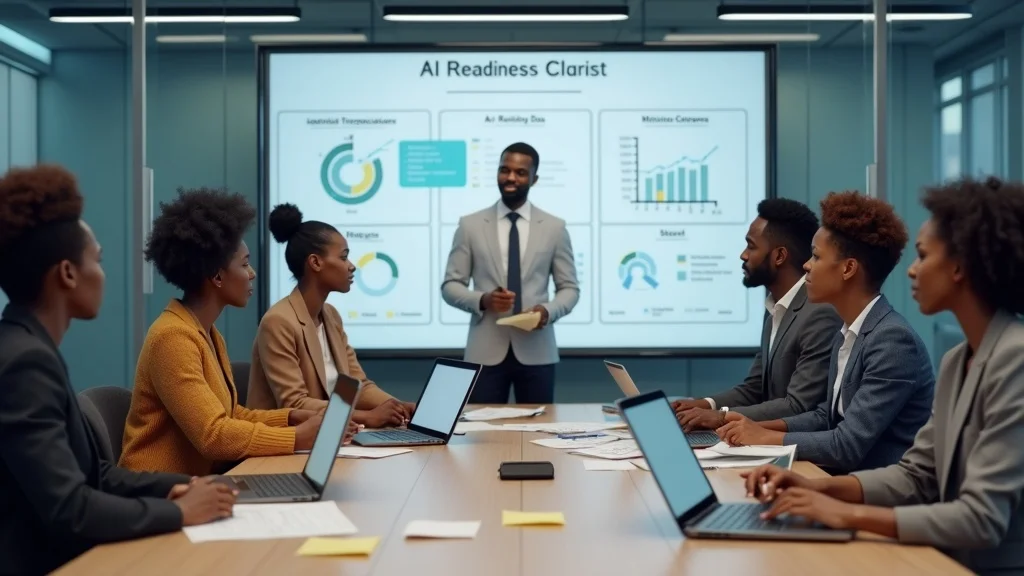
Before implementation, business owners must conduct a comprehensive assessment of organisational readiness for AI. This includes evaluating technical infrastructure, data maturity, and the flexibility of existing brand building systems. Leaders should survey teams to understand attitudes towards AI and identify areas where training or reskilling is required. A readiness assessment can also reveal key business operations that would benefit most from AI voice agents, whether automating repetitive customer support tasks or integrating with digital content creation engines.
Organisations can then map out a clear path—from small pilots to full-scale adoption—focused on achieving high-impact wins. Structured planning helps avoid common pitfalls and lays the foundation for sustainable, long-term integration of AI tools and technologies in business growth ecosystems across Africa.
Building Capacity: Training, Skills Development and Change Management
Building capacity involves upskilling existing staff and attracting AI talent. Successful African businesses invest in continuous learning via workshops, online courses, and partnerships with universities or hubs. Prioritising both technical and soft skills ensures that voice agents, data analysts, and change champions can drive innovation and content engine development harmoniously within organisational teams.
Adaptable change management frameworks empower teams to embrace new technologies, experiment with AI tools, and measure incremental improvements. This approach reduces resistance and transforms every employee into an advocate for strategic AI implementation, accelerating the pace at which African enterprises excel in digital transformation initiatives.
Creating Strong AI Governance Structures in African Enterprises
AI governance forms the backbone of responsible adoption, ensuring accountability, ethical usage, and data privacy compliance. African businesses are designing governance models that reflect local regulatory requirements and cultural priorities, establishing oversight committees, and drafting clear usage policies for all AI voice systems and voice agents.
Proactive governance promotes transparency, supports ethical decision-making, and addresses customer concerns about AI usage. Strong governance builds trust—internally and externally—while enabling African brands to lead with integrity, dignity, and a clear competitive edge in content creation and business development.
| Step | Action | Expected Impact |
|---|---|---|
| 1. Assess Organisational Readiness | Evaluate infrastructure, talent, data maturity | Identify readiness gaps; prioritise high-impact areas |
| 2. Define AI Strategy & Governance | Set clear objectives, draft policies, create oversight | Align AI initiatives with business goals; build trusted culture |
| 3. Build Internal Capacity | Train teams, hire talent, foster continuous learning | Empower employees, reduce resistance, drive adoption |
| 4. Pilot and Scale Solutions | Deploy voice AI and content engines in pilot projects | Test, measure, iterate, scale success across business |
| 5. Measure & Optimise | Monitor outcomes, refine processes, maintain compliance | Ensure sustainable long-term organisational growth |
Essential AI Tools, Voice Agents, and Solutions Powering African Businesses
Modern African enterprises are rapidly deploying a mix of AI voice, voice agents, and other advanced AI solutions to drive operational efficiency and brand differentiation. These tools act as the content engine flywheels powering everything from customer interactions to personalised marketing, process automation, and real-time data analysis. Critical to long-term success are solutions tailored to unique African market conditions—inclusive language models, reliable mobile access, and integration with local payment and service platforms.
Vanguard African businesses use AI-powered chatbots, advanced call routing systems, and dynamic content creation tools to boost productivity, automate workflows, and gather actionable insights. Supporting this is a focus on continuous optimisation—selecting AI solutions that adapt as business needs evolve, without imposing unnecessary complexity or cost burdens on the organisation.

Overview of Voice AI, Voice Agents, and AI Voice in African Business Context
Voice AI, voice agents, and AI voice platforms are transforming business operations in Africa. These tools provide natural language interaction between customers and enterprises, improve information retrieval, and drive seamless support experiences across sectors. In markets where mobile penetration outpaces desktop internet, voice-based AI solutions are especially valuable, ensuring accessibility and ease of use for customers across Africa.
AI voice agents are adept at managing high call volumes, automating repetitive queries, and escalating complex cases. They also contribute to content creation system efficiency, translating data into actionable reports that help business owners make smarter decisions. The result: improved brand loyalty, increased sales, and a measurable return on AI investment.
Evaluating AI Solution Fit: Factors for Business Owners and Decision Makers
When evaluating AI solutions, African business owners must focus on strategic alignment, scalability, and ease of integration. Key criteria include the tool’s compatibility with existing infrastructure, adaptability to local languages, and capacity for customisation to address business-specific challenges. Equally important are data privacy features and transparent governance mechanisms, ensuring compliance with regulations and building customer trust.
Decision-makers should also assess support options, pricing models, and upgrade pathways for each AI solution. Voice AI and voice agents with modular designs can offer long-term operational flexibility, allowing African businesses to expand across sectors and regions as market opportunities multiply.
- Integrating Voice AI for Customer Support
- AI-powered automation for scalability
- Advanced data analytics and forecasting
- Enhanced agent-customer interaction with voice agents
Driving Ethical AI Adoption and Responsible Use Across African Businesses
With growing AI adoption, African enterprises must prioritise ethical considerations and responsible use. Ethical AI frameworks safeguard against bias, support transparent decision-making, and protect customer data—all vital as businesses deploy content creation systems and voice agents at scale. The stakes are high: a mistake in algorithmic customer support or privacy breach can erode the trust painstakingly built over years.
This ethical imperative is gaining visibility in African boardrooms, especially as regulators focus on responsible AI adoption. The most successful organisations view governance not as a compliance hurdle but as a strategic differentiator, ensuring the long-term health and reputation of their brand building system.
Ethical Considerations for AI Implementation in African Enterprises
African businesses must consider local contexts—including cultural nuances, language diversity, and patterns of technology access—when designing and deploying AI solutions. Key ethical challenges include mitigating biases in training data, ensuring inclusivity, and offering transparency about AI decision-making. Data privacy is paramount; clear consent protocols and secure storage infrastructure are essential for maintaining user trust, particularly as more sensitive transactions move online.
Leaders should continuously educate staff on responsible AI use, building systems that proactively identify and address unintended consequences. These steps help position African enterprises as responsible innovators, ready to scale AI tools confidently amid changing regulatory and market conditions.

Best Practices for Responsible AI Use and AI Governance
To ensure responsible AI adoption, African businesses are establishing robust AI governance structures. Best practices include forming cross-functional AI ethics committees, drafting clear data handling policies, and engaging external stakeholders in guidelines development. Organisations are also investing in continuous governance training for staff and transparent reporting on AI system performance.
Responsible governance mitigates reputational risks and ensures that each content engine flywheel, AI solution, and brand building system is deployed safely and strategically. By embedding ethics into every stage of the AI adoption journey, African businesses can deliver value to stakeholders and differentiate themselves in the crowded marketplace.
Overcoming Barriers: Common Challenges and Unique Opportunities for AI in Africa
Despite the promise of AI, many African enterprises face infrastructure challenges, such as inconsistent internet, limited ICT investment, and a digital divide between urban and rural communities. Yet, these barriers unlock unique opportunities for leapfrog innovation—adopting mobile-first solutions, developing local language AI voice agents, and forging public-private partnerships to accelerate AI-driven transformation.
By leveraging Africa’s rich innovation ecosystems and community-driven mindsets, businesses can co-create new platforms, share resources, and harness the collective capacity of hubs, universities, and start-ups. The result: locally tailored, scalable AI solutions that align with business objectives, drive competitive advantage, and accelerate the continent’s economic development.
Addressing Infrastructure Gaps and Digital Divide
African business owners must actively invest in digital infrastructure, collaborate with telecommunications providers, and implement mobile-friendly AI tools. Forward-thinking enterprises are exploring satellite, cloud, and offline-first solutions to bridge connectivity gaps, ensuring that content creation engines, voice AI, and customer support systems reach all markets.
Bridging the digital divide is not just about technology—it’s about providing training, affordable access, and community engagement to empower every African entrepreneur and customer to leverage AI equitably in their personal and professional lives.
Leveraging Partnerships and Innovation Ecosystems
Strategic partnerships are playing a pivotal role in amplifying AI’s impact across Africa. Business owners collaborate with local and international tech companies, research institutions, and government agencies to co-develop AI solutions that speak to African realities. These innovation ecosystems foster talent growth, knowledge exchange, and the rapid deployment of context-relevant tools—fueling new opportunities for scaling brand building and customer support excellence.
Partnerships also help overcome resource constraints through shared infrastructure, pooled expertise, and co-investment in advanced AI voice and content systems. By intentionally participating in such ecosystems, African businesses transform challenges into blueprints for innovation and sustainable growth.

“African businesses can turn unique operational challenges into innovation blueprints with the right AI adoption approach.”
Practical Steps: How Should African Businesses and Founders Leverage AI Adoption Now
- Identify high-impact areas for AI integration
- Conduct organisation-wide AI readiness assessment
- Establish clear AI governance and data privacy policies
- Invest in AI talent and continuous upskilling
- Pilot AI solutions starting with customer support or voice AI
- Measure results and scale solutions

People Also Ask: Deep Dive into AI in Africa
What is the AI strategy for Africa?

African business leaders are increasingly aligning national and organisational strategies to foster talent growth, ethical adoption, and AI-driven innovation ecosystems that fit local needs.
How can leaders boost AI adoption in their organization?
Leaders should prioritise education, champion change management, and create collaborative environments that encourage agile AI solution development with a focus on local customer support needs.
How is AI being used in Africa?
AI is being utilised by African businesses for voice ai, predictive analytics, healthcare diagnostics, financial inclusion, and automation of business processes.
How would you advocate for AI adoption within your organization?
Advocate with evidence-based use cases, highlight pilot wins, and demonstrate strategic business benefits while addressing ethical, talent, and governance challenges specific to African businesses.
Future Outlook: How Should African Businesses and Founders Stay Ahead with AI Adoption
Emerging Trends in AI Voice, Voice Agents, and Customer Support for African Businesses
The future promises even more sophisticated AI voice and agent technologies for African enterprises. We anticipate increased natural language fluency, regional language capabilities, and integration with automated knowledge bases for customer support. Businesses will further benefit from AI-driven analytics, dynamic data visualisation, and the content engine flywheel effect—continuously refining services based on real-time feedback in every industry from fintech to retail.
AI voice systems will play a larger role in education, healthcare, and government, providing critical information to previously underserved populations. Leaders who stay abreast of these trends, experiment with pilot projects, and remain agile in their strategies will position their brands at the forefront of the African digital economy’s next chapter.
Building Resilient and Scalable AI Strategies for Long-Term Growth
To sustain momentum, African businesses must build AI adoption into the DNA of their organisational culture and systems. This means embedding continuous learning cycles, evolving governance frameworks, and remaining responsive to feedback from teams and customers. Scalable AI strategies hinge on a blend of robust data infrastructure, adaptive skills training, and a commitment to responsible, transparent use of technology across all touchpoints.
By future-proofing operational models and investing in brand building systems powered by AI, African businesses will not only weather disruptive shifts—they’ll set the tone for digital leadership across emerging markets worldwide.
Imagery: AI technology, African business support scenarios, and future-focused transitions showcase evolving digital excellence on the continent.Key Takeaways for African Businesses on AI Adoption Strategies
- Future AI readiness hinges on culture, leadership, and well-defined strategy
- Voice AI and automated customer support offer scalable growth opportunities
- Successful AI adoption is rooted in governance, talent, and responsible implementation
- African businesses are uniquely positioned to shape innovative AI solutions for emerging markets
Frequently Asked Questions on How Should African Businesses and Founders Approach and Leverage AI Adoption at the Organisational Level
How can African business owners start their AI adoption journey?
African business owners should begin with a realistic assessment of current digital readiness, identifying key areas where AI can drive immediate impact—often in customer support with voice AI or automation of routine business processes. Engaging staff in skills development, piloting manageable projects, and partnering with local AI providers ensure smoother integration and measurable success from the outset.
What are effective AI solutions for African businesses concerned about cost and scalability?
Solutions such as cloud-based voice AI, open-source analytics tools, and modular content creation systems allow African businesses to start small yet scale efficiently as benefits are realised. Many providers offer tailored options for African markets, ensuring compatibility with mobile infrastructure and local languages without requiring large upfront investment.
How can voice ai and voice agents transform customer support in African enterprises?
Voice AI and agents can automate high-volume customer enquiries, enable personalised engagement in local languages, and free human staff for value-added tasks. These tools improve customer satisfaction, reduce wait times, and provide operational insights to help management refine services in a competitive digital economy.
Why is AI governance crucial in African businesses?
Strong AI governance safeguards against misuse, bias, or privacy breaches, ensuring trust, ethical compliance, and long-term business integrity. Effective governance empowers African businesses to innovate confidently, scale responsibly, and strengthen their brand reputation in new and evolving digital markets.
Discover Why Strategic AI Implementation Matters Most for African Businesses
To build unshakeable authority and future-readiness, African businesses must embrace strategic AI implementation. Read more about why strategic AI matters.
Conclusion: For Africa’s business leaders, embracing AI today means shaping tomorrow’s success. Invest in strategy, skills, governance, and local solutions—stay adaptable, responsible, and bold as the continent takes its seat at the global forefront of digital innovation.
As you continue your journey toward AI-powered transformation, remember that the most successful African businesses are those that combine tactical innovation with a strategic vision for the future. By exploring advanced approaches to digital infrastructure, content systems, and organisational leadership, you can unlock even greater value and resilience for your enterprise. For a deeper dive into building unshakeable brand authority and mastering the art of strategic content in the age of AI, explore how strategic content systems can future-proof your business and elevate your brand’s impact. The next chapter of African digital leadership is being written now—make sure your organisation is ready to lead it.
To effectively approach and leverage AI adoption at the organisational level for future AI readiness, African businesses and founders can benefit from the following resources:
-
“A Practical Guide to AI Adoption for African Businesses”: This guide distills lessons from deploying over 100 AI systems across African enterprises, emphasizing that successful AI adoption hinges on strategy, readiness, governance, and execution rather than technology alone. (isaackofimaafo.com)
-
“AI CoLab Africa”: AI CoLab Africa offers strategic AI advisory, training, and innovation support tailored for African organisations. Their services include AI readiness assessments, strategy development, governance support, and implementation assistance, all designed to align with business goals and ensure ethical, measurable AI adoption. (aicolab.africa)
By exploring these resources, African businesses can gain practical insights and structured support to navigate the complexities of AI adoption, ensuring they are well-prepared for future advancements in artificial intelligence.




Write A Comment