

We are living in an amazing technology era where one can not merely imagine but enjoy walking into a bustling coworking space in Lagos or Nairobi. Greeted by groups of African entrepreneurs cluster around laptops, their screens aglow with the pulse of new technologies. In the corners, founders exchange ideas about artificial intelligence breakthroughs, while digital dashboards update with real-time business insights. This is the reality of AI in Africa today, vibrant, energetic, and at the epicenter of a quiet revolution. AI Africa Briefs doesn’t just report on this change; it inspires founders to harness the AI signal for business growth. This article unpacks how the AI wave is transforming opportunity on the continent, guiding both established leaders and emerging innovators toward the future.
A Transformational Era: Observing AI’s Early Impact on Africa’s Business Landscape
As the AI signal sweeps across the continent, African business owners and founders face an unprecedented era of transformation. AI Africa Briefs is proving to be a vital resource, providing practical insights on how artificial intelligence can redefine strategy and growth within resource-limited environments. Unlike previous tech revolutions that often bypassed local concerns, today’s AI movement is being shaped from the ground up, with a unique flavour of sovereignty and self-determination. This movement is grounded in the practical reality of leveraging AI tools to solve distinctly African challenges, from improving crop yields in rural farms to advancing fintech solutions in bustling urban centres.
Early adopters—particularly small- and medium-sized enterprises, are discovering that AI applications can optimise logistics, create smarter supply chains, and foster more inclusive financial systems. Across the continent, investors and governments are taking note, funnelling support into data centres and AI research institutes. Yet, these benefits are not distributed evenly. Digital infrastructure, internet access, and policy readiness all shape the pace and potential of AI development. The result is an African AI landscape where innovation thrives, but where each business owner must navigate their own path through a mix of global influences and local realities.
Scenario: African Founders Navigating the Rise of the AI Signal
Consider Amina, a founder in Ghana, who recently integrated machine learning algorithms into her agribusiness operations. With limited resources, she leverages AI tools to forecast weather patterns and optimise crop cycles. At the same time, an e-commerce starter in South Africa deploys AI systems for inventory management, making smarter ordering decisions with insights from large amounts of data. These stories encapsulate the present moment. African founders are not only identifying potential within AI but also adapting global technologies to their immediate contexts. Their success depends on their ability to combine bold, entrepreneurial thinking with practical, ground-level problem-solving—to unlock the full potential of the AI signal in Africa.
For those interested in actionable strategies and real-world examples of how African businesses are integrating artificial intelligence into their operations, the AI NEWS AFRICA BLOG offers in-depth coverage and practical guides tailored to the continent’s unique challenges and opportunities.

Artificial Intelligence as a Catalyst for Entrepreneurial Change
Across the continent, artificial intelligence is emerging as more than just a tool, it's a catalyst for entrepreneurial change. African business owners are finding that leveraging AI means unlocking new business models, streamlining operations, and gaining access to market intelligence otherwise out of reach. With a swelling interest in AI research and development, African governments support startups through grants and regulatory sandboxes, while regional incubators provide access to the latest AI tools. Notably, the private sector is leading the charge, fostering a dynamic AI ecosystem that embraces inclusion, adaptability, and resilience.
Case studies from Kenya, Nigeria, and South Africa demonstrate that when AI applications are paired with local insight, results are substantial: mobile banking innovations power entire communities, health startups predict emerging outbreaks, and logistics firms halve delivery times using machine learning. AI Africa Briefs steps in here, not just reporting, but sparking conversation and community among founders, policy makers, and everyday innovators, championing the idea that AI in Africa is best used with sovereignty, not servitude.
Leveraging AI for Small and Medium Enterprises in Africa
For Africa’s small and medium enterprises (SMEs), the journey toward AI adoption is as much about accessibility as ambition. With modest capital and sometimes unreliable digital infrastructure, the challenge is real. Yet, these constraints foster creative ways to leverage AI. SME founders tap into open-source language models for customer engagement, use low-cost machine learning applications for inventory management, and build internal dashboards that process financial insights in seconds. AI systems for SMEs mean more accurate forecasting, lower operational costs, and an ability to scale using data rather than guesswork.
Forward-thinking companies even partner with local universities, co-creating AI tools tailored to specific sectors such as agriculture, healthcare, or logistics. These partnerships enable SMEs to contribute to the national development of their countries, reinforcing the African policy ideal that technology should serve people, not just profits. AI Africa Briefs offers SMEs blueprints for action, empowering them to transform their approach to business, compete globally, and unlock growth with limited resources.
What You'll Learn From AI Africa Briefs
Insight into how AI is changing African business strategies
Key examples of African founders embracing AI signal
Opportunities and pitfalls presented by AI technologies
Understand sovereign approaches to AI adoption in Africa
Understanding the AI Signal: Contexts Unique to the African Continent
The story of AI in Africa is not a mirror of Silicon Valley or Beijing; it’s an evolving narrative rooted in context. African policymakers, researchers, and founders are defining the AI signal on their own terms. From vast rural expanses, where mobile connectivity trumps fibre, to urban tech hubs where data science meets ancestral wisdom, the continent shapes AI—and is shaped by it, differently. AI research here has a distinct trajectory: while some countries focus on linguistics and regional dialects for local search engines, others innovate with low-power neural networks designed to cope with unreliable energy supplies.
More than just adapting to limitations, Africans are innovating at the boundaries of AI development. Digital infrastructure, once seen as a limiting factor, is now a canvas for next-generation solutions, with solar-powered data centres and distributed computing projects springing up across the continent. The result is a homegrown approach, one that recognises the importance of sovereignty and self-determination in the face of rapid technological change.
AI Research and its Distinct African Trajectory
African AI research does not simply follow; it leads. Scholars, engineers, and AI researchers collaborate on projects that address multilingual contexts, unreliable networks, and unique socio-economic conditions. In places like South Africa and Kenya, cross-disciplinary teams build language models and AI systems capable of handling local languages, aiming to ensure inclusivity, preserve cultural identity, and facilitate access.
Partnerships between universities, private sector companies, and even governments have formed the backbone of an emerging AI ecosystem. These collaborations spark innovation driven by real African use cases, proving that innovation can bloom from necessity. For example, AI is deployed to analyse satellite data to track desertification or to streamline financial flows through fintech platforms, vital for both local and national development.

Local Challenges and Global Influences Shaping the AI Signal
Despite rapid progress, significant challenges remain for the continent. Uneven digital infrastructure, sporadic internet access, and limited resources affect the adoption of advanced AI systems. Many businesses, especially those in rural areas, struggle to access reliable data centres or dependable cloud services. However, global AI developments, from advanced language models to open-source solutions, continue to influence how African businesses can leapfrog traditional barriers.
The global economy’s AI race has both inspired and cautioned African founders. While the example of international giants prompts ambition, it also raises concerns about data sovereignty and equitable participation. African governments are actively shaping policy to balance global opportunity with safeguarding national interests, ensuring a future where AI is used for empowerment rather than exploitation. The AI signal, therefore, is as much about identifying potential as protecting African values in the face of rapid change.
Cultural Perspectives: AI with Sovereignty, Not Servitude
Across the continent, cultural perspectives shape the conversation about AI adoption. There is a strong movement toward using AI with sovereignty: communities want to own their data, control their technological destiny, and ensure AI is developed for, not merely in, Africa. This requires bespoke AI applications sensitive to local languages, customs, and social structures, far removed from off-the-shelf imported systems.
The push for AI sovereignty also means resisting one-size-fits-all solutions. African AI advocates argue for data localisation, equitable algorithmic development, and policy frameworks that empower their citizens. As AI Africa Briefs frequently highlights, sovereignty is not just a political ideal, it’s a business imperative. Only by embedding Africa’s unique social realities into the AI signal can the continent fully harness AI’s potential, and champion progress that is both responsible and inclusive.
Leveraging AI: How African Business Owners and Founders Are Adapting
Founders and business owners in Africa are not merely observing the AI wave from a distance—they are active participants, shaping the direction and impact of technology on their industries. The stories emerging from AI Africa Briefs show a new generation of African leaders eager to tackle historical barriers through creative AI use. From fintech entrepreneurs mapping out inclusive lending models to logistics companies deploying machine learning for route optimisation, the message is clear: African ingenuity thrives when paired with responsible AI adoption.
As a result, we are witnessing a flourishing of use cases, where AI applications are no longer experimental but at the very core of operations and growth strategies. The adaptive mindset and willingness to learn underscore the strength of Africa’s founders. By forging collaborations, investing in AI literacy, and aligning AI systems with market needs, these entrepreneurs are not just keeping up, they are charting the course for Africa’s digital future.
Examples of Forward-Thinking Entrepreneurs Embracing Artificial Intelligence
Names like Tunde Kehinde of Lidya and Judith Owigar of AkiraChix stand out, but thousands more are building, testing, and refining local AI solutions. Take a Ugandan agritech founder using AI models to diagnose crop diseases via smartphone images, or a Ghanaian fintech whiz automating credit scoring for underbanked populations. These innovators draw on a deep understanding of local pain points, customising AI applications to leapfrog old barriers around access, inclusion, and scalability.
Such stories demonstrate the expanding horizon for AI use cases. They inspire others by proving that homegrown innovation can compete, sometimes even outperform, imported technology. Their agility and local sensitivity ensure that the AI signal, as delivered by Africa’s founders, gives rise to growth strategies built on both ambition and grounded, context-driven insight.

Tools, Tactics, and ‘AI Africa Briefs’: A Practical Guide
What practical steps can founders take to leverage AI in Africa? First, tapping into resources like AI Africa Briefs is essential. This platform compiles guides on AI literacy, reviews the latest use cases, and spotlights African policy updates. Next, founders should prioritise skills-building workshops, often delivered by local tech hubs or universities, to ensure their teams can work effectively with machine learning tools and language models.
Many choose to deploy open-source AI tools, such as TensorFlow or Hugging Face, to reduce costs and custom-build solutions. Others invest in partnerships with local AI research institutes, securing expertise around regulation, data management, and context-specific deployment. Pair this with steady monitoring of global developments, and African business owners find themselves equipped to adapt rapidly, stay resilient, and compete. AI Africa Briefs, in this sense, acts not merely as a source of news but as a roadmap for future-ready businesses.
Real-World Case Study: Local AI Startups Spearheading Innovation
Consider the story of a Nairobi-based logistics startup that reduced delivery times by over 40% using AI route optimisation, or a Cape Town healthcare firm that employs natural language processing to streamline patient triage. These AI applications might sound cutting-edge, but they are becoming increasingly common as founders seek out practical, revenue-generating solutions.
Such success stories illustrate how the combination of visionary leadership, technical know-how, and access to AI resources results in real, scalable business impact. AI Africa Briefs regularly highlights these journeys, providing African business owners with both inspiration and practical insights to emulate in their own industries.
Opportunities from the AI Signal: Competitive Advantages for Africa
The arrival of the AI signal brings transformative opportunities across key African sectors. Whether it’s harnessing machine learning for smarter farming or using AI to deliver healthcare in remote villages, African innovators are turning global advances into competitive local advantages. AI Africa Briefs explores how these advantages give rise to new business models—ones that not only accelerate growth but also reinforce Africa’s drive for technological sovereignty.
Small businesses and multinational firms alike increasingly position AI development at the core of their strategies, achieving faster decision-making, sharper risk identification, and entirely new revenue streams. The unique socio-economic patchwork of Africa, once seen as an obstacle, can now be a springboard for novel AI applications, proving that innovation is not just about the technology itself, but about who controls and adapts it.
New Business Models Driven by Artificial Intelligence
The most exciting AI-driven models in Africa centre on accessibility and impact. Take the rapid rise of pay-as-you-go microfinancing, here, AI systems assess credit risk using mobile phone usage, text history, and even satellite imagery, bypassing traditional banking constraints. In the agricultural sector, platforms employing AI research predict weather shifts and offer adaptive planting advice to smallholder farmers, slashing losses and boosting yields.
Elsewhere, healthcare startups use AI-powered triage and diagnostics to bridge the gap in doctor shortages, while creative industries leverage machine learning to localise content for diverse language groups. These innovations make the AI signal less about fancy technology and more about expanding what’s possible for entrepreneurs, consumers, and entire industries across the continent.
Strengthening Africa’s Tech Sovereignty Through AI Use
African policymakers are increasingly assertive about AI sovereignty. This includes regulatory pushes for data localisation, the rise of local data centres, and the fostering of domestic AI talent. By prioritising homegrown AI development, Africa can ensure that private data stays within national borders, that AI use aligns with local customs, and that economic value is created and retained within the continent.
AI Africa Briefs champions this shift, advocating for long-term strategies combining ethical frameworks, public incentives, and private investment. The endgame is not just adoption but meaningful, sovereign control, Africa’s future, shaped by Africans, for Africans, in the global AI age.

Lists: Five High-Growth Sectors Where AI Africa Briefs Make a Difference
Agriculture
FinTech & Mobile Banking
Healthcare
Logistics & Supply Chain
Creative & Media Industries
Comparing AI Adoption in Key African Industries vs Traditional Practices |
||
Sector |
Traditional Approach |
With AI Adoption |
|---|---|---|
Agriculture |
Manual crop monitoring, seasonal planting, low data use |
AI-enabled disease prediction, weather analytics, optimised yield |
FinTech & Mobile Banking |
Branch-based banking, paper records, high costs |
AI credit scoring, mobile-first services, fraud detection |
Healthcare |
In-person triage, slow diagnostics, limited reach |
AI telemedicine, rapid diagnosis, scalable outreach |
Logistics & Supply Chain |
Manual routing, paper manifests, frequent delays |
AI route optimisation, real-time tracking, predictive inventory |
Creative & Media |
Physical distribution, one-language content, generic ads |
AI-driven localisation, multi-language automation, targeted campaigns |

“AI’s promise in Africa lies in its ability to empower, not replace. It’s about reimagining what’s possible for entrepreneurs on the continent.”
People Also Ask: How is AI Affecting Africa?
Analysis: From Local Startups to Regional Giants
AI is ushering in a new era across Africa, one where startups rapidly scale into regional giants, and longstanding firms reinvent themselves overnight. From Accra to Cape Town, businesses use AI to optimise operations, identify new markets, and outpace regional competition. The resulting productivity boosts ripple outwards, supporting workforce evolution and attracting both local and foreign investment. By integrating AI systems strategically, African business owners are building a future where success is defined by innovation, adaptability, and a uniquely African vision for digital transformation.

The AI Signal’s Effects on Productivity & Workforce Evolution
The AI signal is transforming how work gets done in Africa. Machine learning algorithms automate repetitive tasks, freeing up employees for creative, strategic roles. In logistics, AI-driven scheduling minimises delays; in customer service, chatbots handle routine queries in multiple languages. While some worry about AI displacing jobs, many African founders focus on workforce upskilling and job transformation, not replacement. Key roles such as creative strategists, human-centred designers, and AI trainers are on the rise, each essential to shaping AI for Africa’s unique market needs and national development agendas.
People Also Ask: Which of Africa’s Most Successful Founders is Back with a New AI Startup and Already Raised $9m?
Spotlight: Trailblazing Founders and Their Impact in Africa’s AI Space
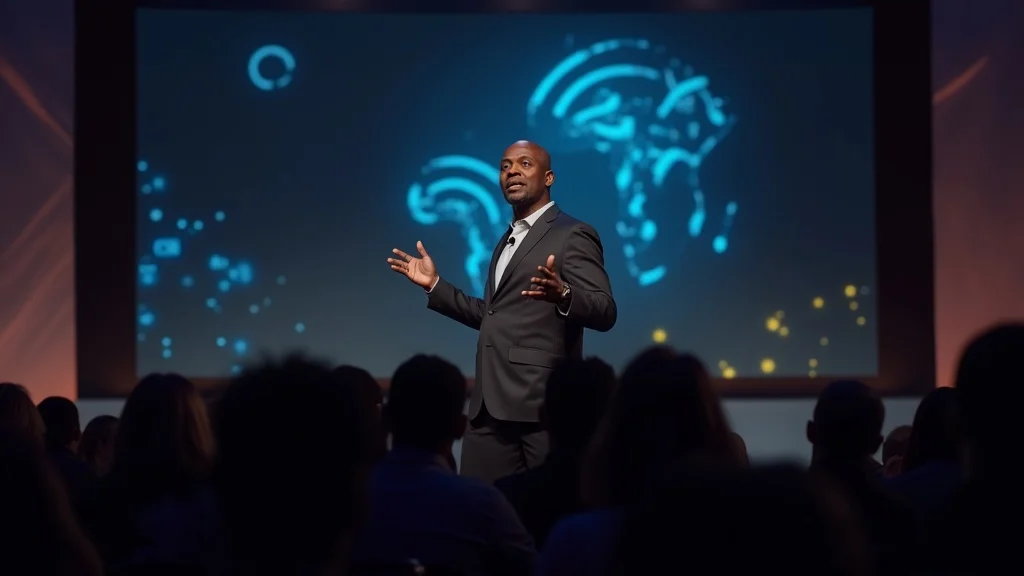
Africa’s tech scene is buzzing with names like Iyinoluwa Aboyeji, whose latest AI startup has already attracted millions in funding, highlighting the growing investor confidence in African-led AI ventures. These high-profile founders are more than just figureheads, they set the pace for broader AI ecosystem growth by demonstrating world-class capability, bold vision, and a willingness to reinvest in local tech talent.
People Also Ask: What is the Biggest Problem in Africa Right Now?
The Digital Divide: AI Accessibility and Infrastructure Challenges
Despite remarkable advances, the digital divide remains one of Africa’s most significant challenges. In many regions, internet access is inconsistent, digital infrastructure is underdeveloped, and electricity supply is unreliable. These factors hinder equal AI adoption, leaving vast potential untapped. Yet, stories abound of communities overcoming obstacles with ingenuity: schools powered by solar energy, data centres nestled near rural towns, and innovators using smartphones to teach coding in local languages.

People Also Ask: Which 3 Jobs Will Survive AI in Africa?
The Future of Work: Enduring Roles Amid the AI Signal
As AI applications expand, three jobs appear especially resilient on the continent. First, creative professionals, marketers, content creators, designers, combine cultural savvy with digital know-how, qualities hard to automate. Second, roles in health and social care require empathy, context understanding, and adaptability, making them uniquely human. Finally, AI trainers and data annotation specialists, who localise and refine AI systems for African realities, will remain in high demand. These fields underscore that, in Africa, the future of work is less about replacement and more about transformation and collaboration with AI.
Navigating Risks: Ethical Considerations and AI Sovereignty in Africa
Safeguarding Data and Encouraging Inclusive Innovation
With technological advancement comes greater responsibility. African businesses and policymakers must contend with ethical questions: how to guard against bias in AI algorithms, secure private data, and promote digital equity? Safeguarding data is paramount, especially as amounts of data grow and cross-border flows increase. Inclusive innovation—where women, youth, and minority communities play critical roles, is more than a buzzword; it is a necessity for meaningful, lasting impact.

Ensuring Fairness in Algorithmic Deployment
Ensuring fairness means constant vigilance: regular audits of AI systems, transparent reporting, and active community involvement. Companies must adopt ethical AI sourcing, aligning with both local legal frameworks and African cultural values. Meanwhile, government oversight and regional collaborations can help prevent harm from imported, unregulated systems. AI Africa Briefs frequently calls for checks-and-balances, firmly placing Africa’s interests at the heart of its digital transformation journey.
Lists: Strategic Actions for Founders to Harness the AI Signal
Invest in AI literacy and training
Prioritise ethical AI sourcing
Collaborate with local AI research institutes
Monitor global AI trends with regional adaptation in mind
FAQs about AI Africa Briefs and Its Impact
How frequently are new AI Africa Briefs published?
AI Africa Briefs is published regularly with updates featuring the latest stories, case studies, and expert analysis on the AI landscape across the continent. Frequency may vary, but readers can expect new issues several times each month, keeping founders and executives informed and inspired.
Can AI Africa Briefs benefit established businesses as well as startups?
Absolutely. While many examples spotlight startups, established businesses use AI Africa Briefs to benchmark strategies, learn from innovative use cases, and identify new opportunities for digital transformation. The briefs help both newcomers and industry leaders stay ahead in Africa’s rapidly evolving market.
What sets African AI innovation apart?
African AI innovation is defined by its context-driven approach. Founders adapt AI applications to resource constraints and diverse languages, ensuring inclusion and cultural relevance. The fusion of local challenges with global technology produces use cases unique to the continent, inspiring worldwide attention and emulation.
Key Takeaways: How the AI Signal Redefines African Business
AI is a tool for empowerment, not displacement, in Africa
Founders must lead with both innovation and responsibility
AI Africa Briefs informs, inspires, and unites a new generation of business leaders
Engage With the AI Signal: The Future of Business Belongs to Africa’s Visionaries
Invitation: Discover the AI Signal Briefs Digital Newsletter Created For African Entrepreneurs and Brand Executives, https://ainewsafrica.com
Conclusion: African business owners and founders hold the keys to a tech-powered future. Stay informed with AI Africa Briefs, lead with vision, act with sovereignty, and let the AI signal unlock new growth opportunities.
As you continue your journey into the world of AI-powered business in Africa, remember that staying ahead means not just adopting new technologies, but understanding the broader trends shaping the continent’s digital future. The AI NEWS AFRICA BLOG is your gateway to expert perspectives, emerging opportunities, and the latest developments in artificial intelligence across Africa. Dive deeper to discover how visionary founders, policymakers, and innovators are building a resilient, inclusive, and sovereign tech ecosystem. Whether you’re seeking inspiration, practical tactics, or strategic foresight, exploring these insights will empower you to lead with confidence in Africa’s rapidly evolving AI landscape.




Write A Comment