

Imagine this: A young African entrepreneur asks an AI assistant about Lagos or Nairobi. The response she receives often feels one-sided—summaries filled with crisis reports, global health warnings, and generic statistics. How does artificial intelligence form its understanding of Africa, its cultures, and its people? Who teaches AI what Africa is? This question goes beyond algorithms—it strikes at the heart of data ownership, representation, and Africa’s digital future. This editorial dives deep into how AI learns about Africa, which voices shape the narrative, and why African ownership of data has never mattered more.
Exploring Who Teaches AI What Africa Is: Starting the Conversation
At the core of who teaches AI what Africa is lies a powerful crossroads between technology, global health data, and African cultural identity. Artificial Intelligence systems—whether powering search engines, language models, or digital health tools—depend entirely on the information they are trained on. But who curates that information, and whose perspectives become foundational for these systems? When the majority of African data funnel into global datasets through international entities like the World Health Organization and other major health organizations, their view frames what AI “knows” about us.
The practical reality is that much of this data comes filtered through the lens of global health priorities. This means that narratives focused on public health emergencies, disease surveillance, and policy resolutions take centre stage, often overlooking African innovation, community-driven initiatives, and the continent’s remarkable diversity. For everyday Africans interacting with technology, these subtle shaping forces influence everything from how we see ourselves in global discourse to whom algorithms prioritise in stories and solutions. Tapping into this conversation is crucial for every African stakeholder—from data scientists and technologists to policymakers and everyday citizens—who cares about an authentic digital identity for Africa.
The Perception of Africa in Artificial Intelligence Systems
The images and stories AI reproduces about Africa are a mirror of the data sets it is fed. Often, this perception is shaped by health crises and international interventions, leading to a dominant narrative of need and emergency. When the World Health Organization or a major health organization publishes data on malaria or Ebola outbreaks, those records become high-frequency references in global AI models. Consequently, AI’s “knowledge” about Africa tends to highlight the public health aspects, overshadowing local achievements and cultural creativity.
This bias is not accidental—rather, it is embedded in whose data is available and which stories are chosen for training. For African audiences, seeing their cultures represented only in times of crisis fosters a disconnect, especially for young professionals and technologists forging new paths. Without meaningful inclusion of local narratives and diverse experiences, AI’s portrayal of Africa becomes incomplete and misunderstood—missing the thriving entrepreneurial scenes, innovative health solutions, and cultural vibrancy shaping the continent’s present and future.

Observing the Influence of Data in Defining Who Teaches AI What Africa Is
The datasets used to build global health and public policy algorithms often originate in institutions distant from African communities. Even when data is collected locally, it is frequently processed, filtered, and contextualised in Geneva or other global decision-making centres. Organisations like the regional office of the WHO, the health assembly, and other influential bodies determine the framing and content that ultimately feed AI systems.
This dynamic means that African experiences and innovations can be lost or diluted within broad international datasets. When AI pulls health statistics, policy trends, or research briefs, the images and priorities it generates do not always reflect African realities as lived by Africans. There is, therefore, a pressing need not just for more data, but for authentic African data stewardship—bringing local voices, languages, and priorities into the digital mainstream to rebalance the narrative and empower future generations.
What You'll Learn in This Editorial on Who Teaches AI What Africa Is
Deep dive into the World Health Organization’s role in African data
Understanding the impact of health organization inputs on African AI representation
Why public health data matters in African AI narratives
How regional office contributions shape AI’s view of Africa
Unpacking the Data: Who Teaches AI What Africa Is?
Africa’s Data Narrative: Context, Contribution, and Challenge
At the source of every AI model lies a fundamental question: whose data tells the story? For Africa, the narrative is shaped by both the quality of locally generated information and the way it is interpreted by global entities. National health ministries collaborate with the regional office of global health bodies, providing invaluable context and input. Yet, the final say in how this data is catalogued and labelled for AI training often rests elsewhere.
This opens a challenge for the continent: How can Africa move from a mere data subject to an active narrator? Contributing homegrown content—not just in public health emergencies but in positive, daily innovations—means infusing greater nuance and pride into how AI platforms “see” Africa. Bridging this gap involves empowering regional data scientists and engaging more actively in partnerships where African voices steer the conversation, ensuring the continent’s future is not just statistically represented, but also culturally and contextually accurate.

Case Study Table: How World Health and Health Organization Data Defines African Stories
Organization/Data Source |
Type of Data |
African Input? |
Impact on AI Perceptions |
|---|---|---|---|
World Health Organization |
Public Health/Statistics |
Partial |
Shapes health-focused narratives |
Health Organization |
Disease Outbreak Reports |
Varies |
Prioritizes crisis events |
Regional Office |
Localized Initiatives |
Often |
Introduces cultural nuance |
World Health Assembly |
Policy & Resolutions |
Limited |
Influences global AI on policy topics |
Who Decides Africa’s Story for AI?
The Power of World Health and Health Organization Data
AI narratives about Africa are heavily influenced by the priorities, values, and voices embedded in the data provided by the World Health Organization, health assembly sessions, and regional offices. These bodies, while important for global coordination, frequently prioritise crisis-driven stories—public health challenges, disease outbreaks, and health emergencies—over stories of local innovation, resilience, and everyday life. This emphasis, though valuable for international collaboration, often means that positive African narratives and local languages become underrepresented in digital spaces that AI occupies.
"Data is only as diverse as the communities contributing to it—but for Africa, whose voice leads?"
For AI to reflect the real Africa, local data ownership and proactive storytelling are crucial. By amplifying initiatives that highlight homegrown solutions, pan-African health achievements, and traditional knowledge merging with modern advances, the continent can start to reclaim its digital identity. This is as much a challenge for multinational health bodies as it is a call to action for African researchers, regional offices, and members of health assemblies to influence which African stories become AI’s standard references for generations to come.

Role of African Data Stakeholders in Who Teaches AI What Africa Is
Regional Office Initiatives and the African Data Future
Regional offices across the continent have a unique vantage point. Positioned close to communities and local health systems, they are best placed to champion African-centric data for AI applications. These offices can shift the focus beyond global health emergencies by gathering and sharing stories of local resilience and progress. By encouraging direct local participation and working with grassroots organisations, regional offices become crucial in rewriting how AI systems portray Africa—not as a monolithic subject of crisis, but as a multifaceted contributor to global innovation and knowledge.
Local data professionals—data scientists, public health officers, and technical experts—are also stepping in to drive authentic storytelling. By leveraging their proximity and understanding of community nuances, they ensure that data reflects lived realities. As more African-led projects take shape in health, technology, and public administration, their success stories can seed AI platforms with narratives that inspire not just the continent, but the world. This marks a shift where regional offices and local contributors become the primary narrators, leading data curation rather than defaulting to external interpretation.
African Health Assembly Efforts Towards Cultural Accuracy
African representatives in health assemblies are increasingly advocating for data frameworks inclusive of cultural nuance. The goal: to move beyond the “disease-centric” lens and recognise innovation, traditional medicine, and blended approaches to healthcare unique to the continent. By working together across borders, health assemblies set policies that emphasise organic language, cultural references, and multi-disciplinary impact. This broadens the base from which AI learns about Africa, transforming global digital spaces into more accurate reflections of the continent’s true vibrancy and achievement.
Assembly-driven projects are fostering partnerships between community leaders, universities, and tech entrepreneurs. These collaborations help document local solutions—like digital health platforms in rural clinics or mobile apps promoting public health in urban centres—that would otherwise remain invisible to AI scraping international datasets. Through such action, health assemblies are sowing the seeds of a digital future where AI’s “knowledge” of Africa means ingenuity, strength, and pride.
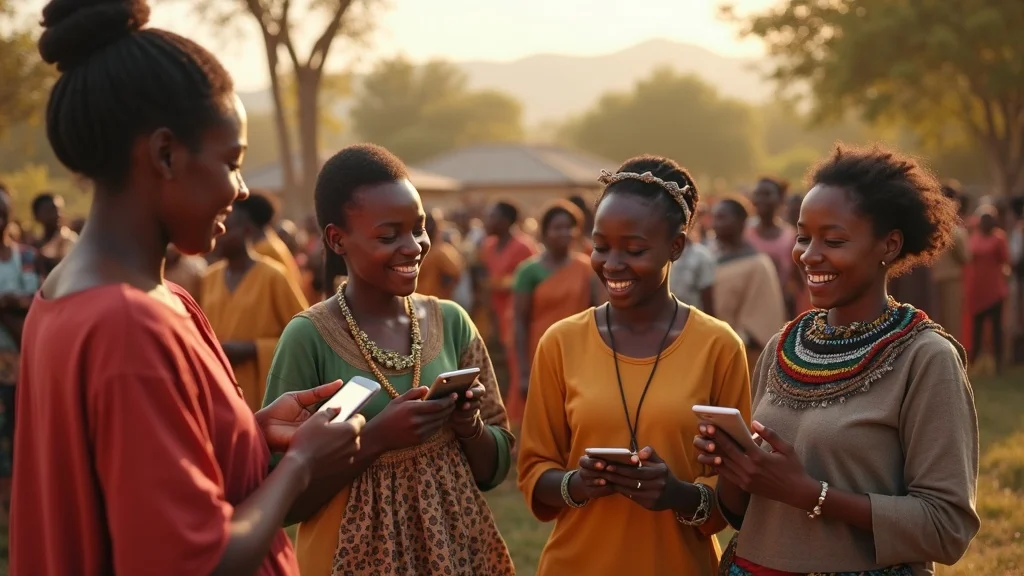
Executive Board and Local Data Empowerment—Changing the AI Conversation
The executive boards guiding health organizations and digital initiatives wield significant power over which data is prioritised for AI. Champions within these boards can advocate for a rebalancing—one that prioritises local languages, region-specific challenges, and stories of community-led breakthroughs. By demanding robust representation on executive teams and investing in digital literacy, African data professionals can ensure that the continent’s perspective is embedded at every level of AI training and deployment.
Local empowerment also means investing in grassroots data collection and stewardship. Supporting community reporters, regional knowledge platforms, and national data repositories allows for proactive narrative-shaping—making Africa a primary source in the data dialogue. As more AI tools are built in Africa, for Africa, the executive boards’ choices will shape not just how the continent is perceived digitally, but also how it reclaims sovereignty over its digital destiny for generations to come.
Lists: Gaps and Opportunities for Africa in AI Teaching
Underrepresentation of local languages by global organizations
Health organization crisis narratives overshadowing African innovation
Opportunities in local data collection and representation
Recommendations for empowering public health voices in AI development
People Also Ask: Who Teaches AI What Africa Is?
Did the United States withdraw from the WHO?
Answer: The United States announced intentions to withdraw from the World Health Organization, but as of now, it remains a participant with fluctuating relations. This dynamic influences how global organizations—including those curating African data—establish authority in AI training.
What are the 4 roles of the WHO?
Answer: The World Health Organization’s four main roles include providing leadership on global health matters, shaping the health research agenda, setting norms and standards, and articulating ethical and evidence-based policy options. These roles affect the narratives AI systems pick up about Africa's health sector.
Is Pakistan a member of WHO?
Answer: Yes, Pakistan is a member of the World Health Organization. The membership landscape reveals how different countries, including African ones, contribute to and are represented in such global collaboration.
WHO is the current CEO of WHO?
Answer: The World Health Organization is led by a Director-General, not a CEO. As of this writing, Dr. Tedros Adhanom Ghebreyesus holds the position, with deep African roots that highlight representation at the leadership level.
FAQs: Core Questions on Who Teaches AI What Africa Is
How can African data experts get involved in AI training? African data experts can join or create local data consortiums, participate in open-source projects, and work closely with public health and policy institutions to ensure that the data used in AI development truly reflects the continent’s needs and strengths. By partnering with universities, healthcare systems, and tech labs, they can drive the narrative from within.
What does ‘who teaches AI what Africa is’ really mean for the continent’s future? It means seizing ownership over Africa’s digital identity. When Africans guide AI development, the continent can shift from being a subject of analysis to a narrator of its future—ensuring that diversity, innovation, and resilience are at the core of every AI-generated insight or recommendation.
What steps can health organizations take to ensure more authentic representations? Health organizations can prioritise collaboration with local stakeholders, collect and share data in native languages, document success stories, and build capacity among regional offices to capture day-to-day realities. These steps anchor AI narratives in African experience, not just imported perspectives.
What challenges exist in changing AI’s African narrative? Core hurdles include limited access to funding for African-led data projects, technological infrastructure gaps, and inertia in global institutions that favour established (often Western-centric) narratives. Overcoming these requires advocacy, innovation, and persistent effort from across the public and private sectors.
Key Takeaways for African AI Stakeholders

African voices and data must lead AI training for authentic representation.
Global organizations have a dominant influence, but local initiatives are key for relevance.
Bridging the narrative gap in AI requires intentional African data advocacy and innovation.
Concluding Thoughts on Who Teaches AI What Africa Is
Reimagining Africa’s Place in AI—A Call for Pan-African Data Sovereignty
For Africa’s story to flourish in AI, it must be written by African hands. Focused advocacy, grassroots involvement, and pan-African collaboration will transform our digital horizons—ensuring AI reflects Africa’s true diversity, innovation, and possibility.




Write A Comment